Artisan Dragons in Flamecraft
Build the production backbone every Fancy Dragon and combo relies on.
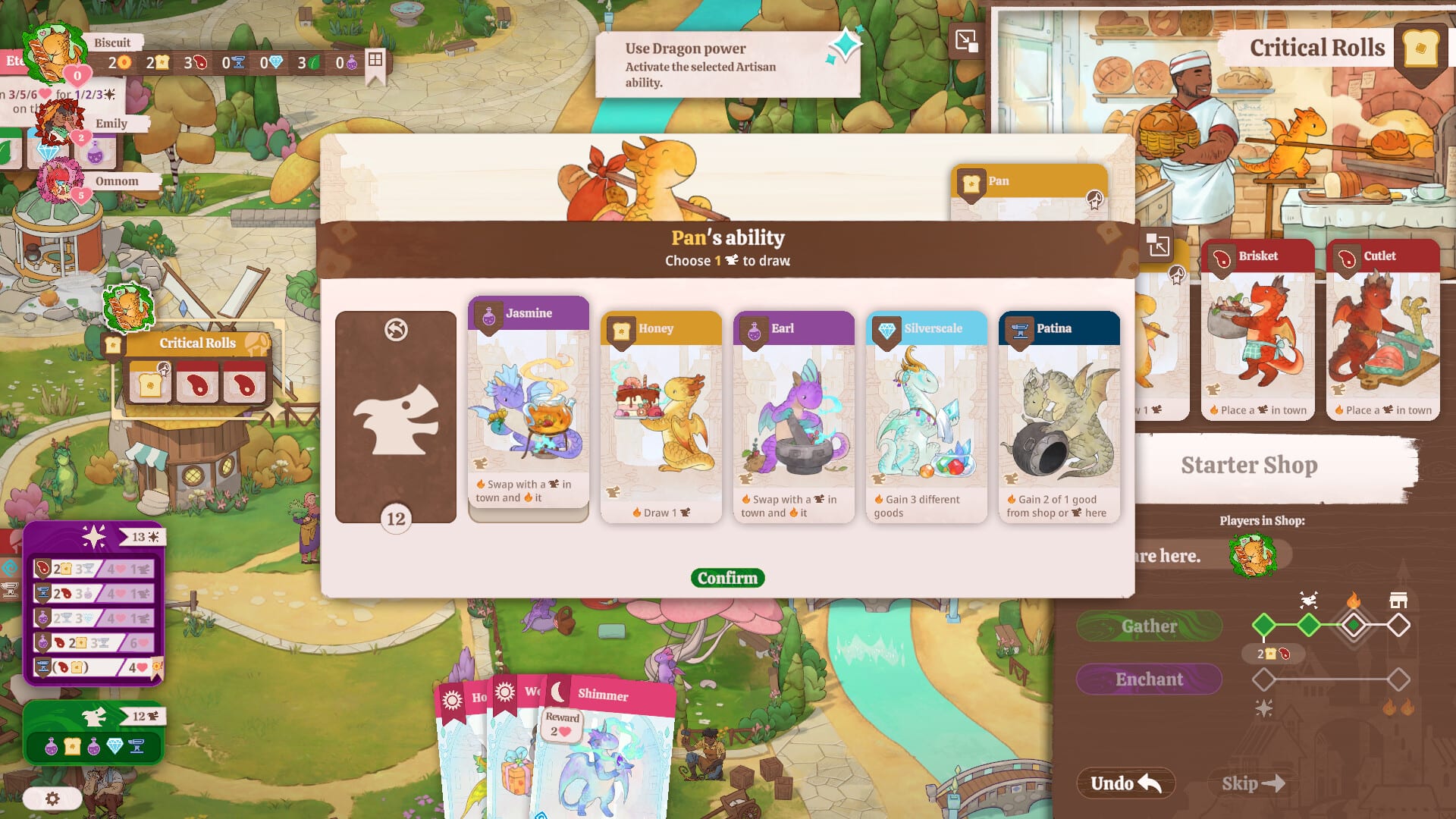
Artisan Dragons are the worker-placement heart of Flamecraft—the profiles you send to Gather goods across the town’s 30 shops, set up chains for Enchant, and prepare sales before Fire Up moves your reputation. Monster Couch’s cozy digital board game keeps tabletop roles intact: each Artisan favors certain goods or shop types, so roster choice shapes entire strategies more than a single lucky enchant.
Read How to Play Flamecraft for turn structure—you visit a new shop each round and pay rivals already there—then use Shops and Resources so tile types match the goods on your card.
Goods tied to Artisans
Production revolves around bread, meat, iron, crystal, plant, and potion. Each Artisan profile favors certain shop types that output those goods. Coins are wild and also score at game end, but Artisans usually generate typed goods first. If your hand lacks the type your enchant display demands, the fix is almost always a Gather on the right shop, not a coin dump.
What Artisans do on a Gather turn
When you choose Gather at a shop, you gain goods from the shop type, tucked enchantments, and matching Artisans present. You may place an Artisan Dragon in a matching empty slot and take its place reward, Fire Up one dragon’s ability (only one on Gather), and use the shop ability. That package is why Artisan timing leads every engine:
- Fill hands with the correct good type before an Enchant visit.
- Claim slots before rivals tax you off the tile next round.
- Set up a single targeted Fire Up instead of the all-dragon Fire Up available on Enchant turns.
Artisans rarely provide enchant discounts themselves; they create enchantable inventory. If your table skips Artisans to rush Fancy recruitment, see Beginner Tips for why that collapses midgame.
Specialty profiles and flexibility
Demo Artisans span narrow specialists and flexible generalists. Specialists score higher when their shops stay open; generalists survive blocking better but peak lower per Fire Up. When drafting in local multiplayer, prefer specialists only if you can anchor their shops early—Combo Strategy describes anchor versus flex planning.
Document your Artisan’s required shops on paper or in the Turn Planner before round one. If two Artisans need the same anchor, negotiate couch etiquette or expect denial plays.
Gather loops and action economy
Most rounds begin with Gather. Efficient Artisan tables repeat tight loops:
- Gather inputs on flex shops with low contention.
- Gather specialty output on anchor shops.
- Hand off to enchantment or Fire Up on the following round.
Idle Artisans signal a broken loop—either a blocked shop or a missing intermediate good. Fix the map before recruiting more dragons.
Pairing Artisans with Fancy Dragons
Fancy profiles multiply value on enchanted goods. Pair them only after your Artisan produces the target good every other round. Misaligned pairs drop a Fancy profile one tier on the Fancy Dragon Tier List. Enchantment Timing explains when to enchant relative to Artisan production beats.
Companions as Artisan support
Companions can complete partial loops—extra Gather on a contested anchor or a cheap move that saves an Artisan action. They do not replace missing specialty production. Read Companions for demo examples where a companion saves an entire round of Artisan downtime.
Scoring through Fire Up
Artisans matter because Fire Up consumes specific goods. Know which Artisan feeds which reputation swing described in How to Win in Flamecraft. A beautiful enchant on the wrong good still wastes an action.
Solo versus multiplayer roster pressure
Solo scenarios still use Artisan loops but punish over-specialization when AI or scenario rules clog shops differently. Multiplayer—couch or future online matchmaking—punishes specialists hardest when five players converge on popular food or craft shops. Draft one flexible Artisan in dense tables even if specialists tempt you.
Demo and full-release notes
The free demo on Steam, PlayStation 5, Xbox Series X|S, and Switch exposes a subset of Artisans. Full-release rosters may add profiles near September 17, 2026; treat unknown names as unconfirmed until patch notes land on release info.
Where to go next
After you can play one Artisan without reading the card, study Fancy Dragons for enchant amplification and Combo Strategy for multi-shop engines.
Frequently Asked Questions
Quick answers for new Flamekeepers.
How many Artisan Dragons should I focus on in the demo?
Learn one specialist and one flexible profile deeply. That covers most demo scenarios without overwhelming new players.
Can Artisans enchant goods themselves?
Rules for enchant actions depend on profile text shown in-game. Use How to Enchant for general rules and your card for exceptions.
Why does my Artisan seem idle after Gather?
Usually a blocked shop or missing intermediate good. Trace the loop on Shops and Resources before spending another action.
Do Artisan choices matter in solo mode?
Yes. Solo still rewards efficient Gather loops; specialists can speed scenarios when their shops stay available.