How to Enchant in Flamecraft
Turn gathered goods into reputation engines across thirty shops.
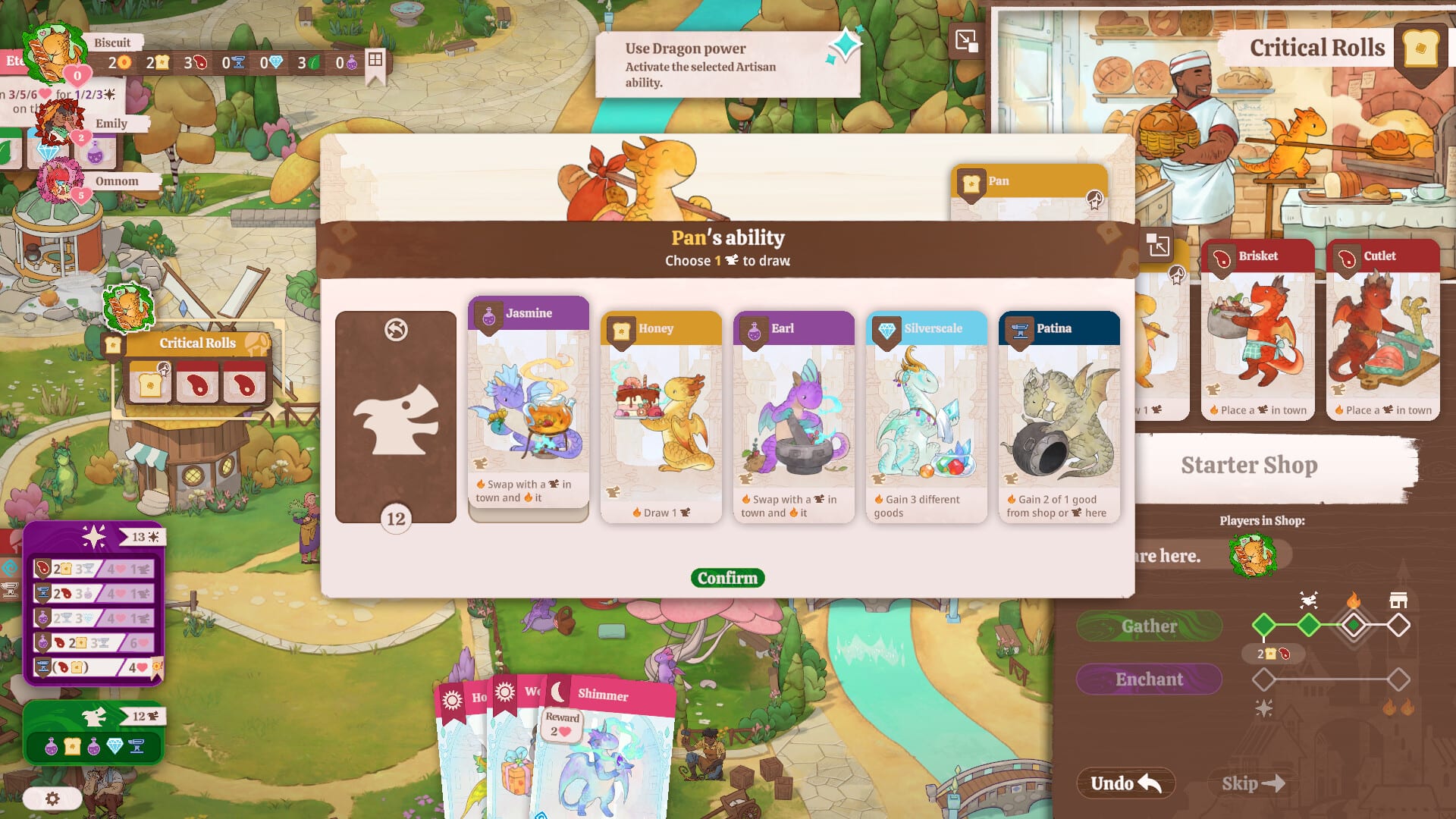
Enchantment is why Flamecraft feels like a craft fantasy instead of a generic resource race. Gather fills your pantry; Enchant turns that pantry into themed goods that score reputation and prime Fire Up. Monster Couch’s digital version of the Cardboard Alchemy design makes chains readable on screen, but the strategic question is unchanged: which shop sequence do you commit to this round, and which dragons make that sequence efficient?
This guide assumes you know basic placement from How to Play Flamecraft or the Demo Walkthrough. It focuses on decision quality, not repeating every tutorial button press.
Enchantment in one sentence
An enchant action consumes specific inputs at a shop and outputs a higher-tier good that either delivers reputation directly, feeds another shop, or satisfies a Fire Up recipe.
If you cannot name your next two outputs after the current enchant, you are probably gathering without a plan.
Shop chains across thirty locations
The town’s 30 shops are not interchangeable. Each has a role in a vertical or horizontal chain:
- Sources lean gather-heavy—fast raw goods, low reputation alone.
- Processors demand mixed inputs and spit out enchanted intermediates.
- Showcase shops pay reputation on delivery or unlock Fire Up thresholds.
Map two chains before the game starts: a safe chain you can run when opponents block you, and a greedy chain that needs a Fancy Dragon or Companion bonus to be reliable.
Cross-check ingredient names with the Resource Checklist until muscle memory sticks.
Gather setup: two turns ahead
Strong enchanters gather for a recipe, not for a pile. Work backward from the Fire Up card or reputation delivery you want:
- List final enchanted good.
- List each shop step and its inputs.
- Assign dragons to cover the first two steps only; defer distant gathers until you control key tiles.
In local multiplayer with up to five players, visible piles invite theft through placement blocks—finish intermediates quickly or enchant them so they are not idle tokens.
Fancy Dragons as enchant modifiers
Fancy Dragons bend rules: cheaper enchants, bonus outputs, extra slots, or shop-type discounts. Hire them when they shorten your chosen chain by at least one action—not when their flavor text looks cool.
Compare candidates on the Dragon Tier List after you identify your chain family (wide gather, fast enchant, reputation rush). A dragon strong in abstract tier lists still loses if it does not touch your shops.
Companions: small triggers, big tempo
Companions rarely replace a full enchant step, but they smooth edges: recover a missing common good, refresh a movement, or add a sliver of reputation when you deliver. Treat them as tempo tools that let you enchant one turn earlier—that early turn often matters more than a late bonus.
When to skip enchanting
Skipping enchant is correct when:
- you must Gather a rare input before a block;
- upgrading a shop lowers future costs more than one enchant payout;
- you are setting up a double Fire Up sequence explained in How to Win in Flamecraft.
Chronic skipping is how players stall mid-track while others fire.
Fire Up: enchant’s payday
Fire Up needs enchanted goods prepared in advance—think of it as publishing your best work to the town. Build enchants that satisfy Fire Up first, then spend leftover actions on minor deliveries.
The demo’s Becca Scott tutorial scripts one Fire Up; unscored practice in the demo is where you test double setups. Full 1–5 player tables punish one-dimensional Fire Up plans when rivals race the same reputation window.
Solo versus group enchant pacing
Solo mode with its lighthouse story often rewards steady enchant rhythms because AI opposition pressures different shops than humans do—details in Solo Mode in Flamecraft. Local multiplayer rewards flexible chains you can pivot when a neighbor occupies your processor.
Planned online matchmaking in the full release will add clock pressure; fundamentals stay identical. See Multiplayer in Flamecraft for couch versus matchmade tables.
Demo limits and full release
The playable demo on Steam, PS5, Xbox, and Switch includes representative enchant chains but not every shop interaction from 1.0. Steam still shows Coming soon for the full product; Switch lists September 17, 2026. Watch release info when patches rebalance recipes.
Practice drill
Run one demo scenario with this constraint: every dragon placement must either complete an enchant or gather a named input for the next enchant—no anonymous hoarding. Then read How to Win to connect enchant tempo to Master of Flamecraft.
For install help, use platforms and demo. For broader context, return to the Guides Hub. Community refinements appear on Players & Creators once you outgrow beginner chains.
Frequently Asked Questions
Quick answers for new Flamekeepers.
Why am I stuck low on reputation despite gathering a lot?
Gather alone rarely moves reputation. You need enchanted goods, deliveries, and Fire Up moments built from completed chains.
Should I hire every Fancy Dragon I can afford?
Hire Fancy Dragons that shorten your planned shop chain. Extra hires that do not touch your routes waste gold and actions.
How do Companions help enchantment?
Companions add small triggers—missing goods, movement, or delivery bonuses—that let you complete enchants one turn sooner.
Does enchantment work the same in solo and multiplayer?
Core enchant rules are the same. Solo scenarios stress different shop pressure; multiplayer adds blocking and race timing for Fire Up.