How to Win in Flamecraft
Reputation strategy from mid-game positioning to Master of Flamecraft.
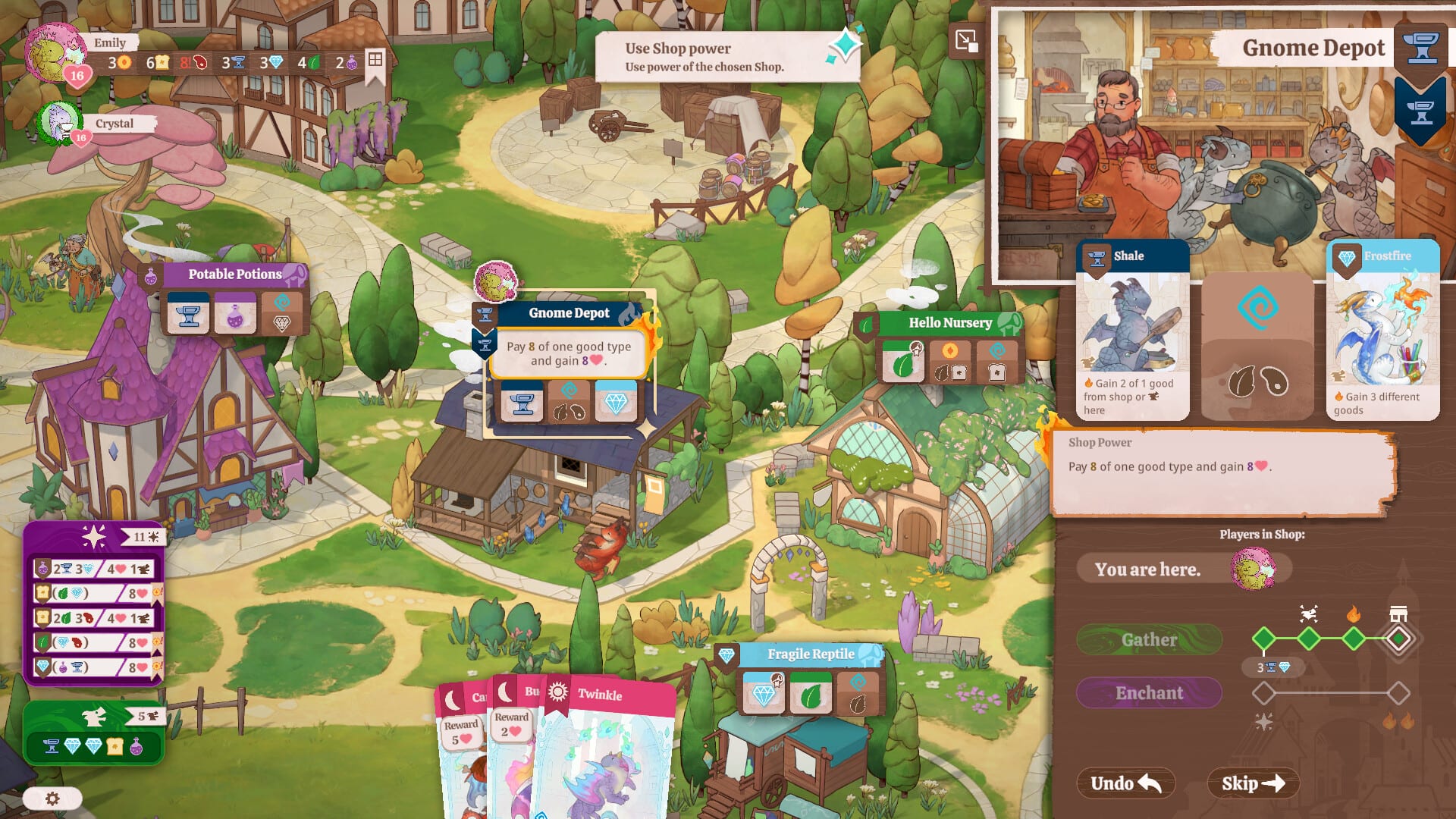
Winning Flamecraft means reaching the summit of the reputation track and earning the title Master of Flamecraft. Money, goods, and dragon rosters are tools; if they do not convert into reputation before your rivals, you still lose. Monster Couch’s digital adaptation of the Cardboard Alchemy board game makes the track visible at all times—use that clarity to plan Fire Up turns two rounds ahead, especially in 1–5 player tables where local multiplayer can swing standings in a single round.
Read How to Play Flamecraft for verbs and How to Enchant in Flamecraft for chain building. This page is about closing games.
Read the reputation race, not the resource pile
Players fixate on full inventories because gathered goods feel tangible. Judges and townsfolk in-universe care about published craft—enchanted deliveries and Fire Up events. Each round, ask:
- Who gained reputation last turn and from what source?
- How many turns until the leader fires again?
- Which shop tiles must I control to stop or copy that path?
If you cannot answer, spend one observational round gathering only what you need to block or join the next Fire Up window.
Fire Up timing is the swing turn
Fire Up is the largest voluntary reputation spike most engines produce. Winning players fire when opponents cannot respond in the same round—either because they lack intermediates or because their dragons are stranded.
Setup pattern:
- Complete enchants quietly one turn before.
- Hold movement or shop priority if rules allow, then fire early in turn order.
- Spend follow-up actions on small reputation chips that cement the lead.
Double Fire Up lines win demo scenarios and will punish passive groups in the full release. Practice them in the free demo after the Becca Scott tutorial—walkthrough notes live in Demo Walkthrough.
Shop control without overcommitting
With 30 shops on the board, controlling every tile is impossible. Win by owning the three nodes your chain needs: a reliable gather, a processor, and a showcase or Fire Up gateway.
Upgrade those shops first. Spread upgrades across unrelated tiles look impressive but slow your race up the track.
Use the Resource Checklist to verify you are not upgrading a shop whose output your Fancy Dragons never consume.
Dragon selection for winning, not flavor
Artisan Dragons should cover your triangle of shops every round without taxi-ing across the map. Fancy Dragons should shorten the Fire Up path you already committed to—swap them mid-game only when a rival’s block breaks your old chain.
Consult the Dragon Tier List with your chain in mind, not as a generic power ranking.
Mid-game pivot signals
Pivot when:
- a rival occupies your processor twice in a row;
- your enchant outputs feed their Fire Up;
- solo or AI pressure in solo mode targets a different reputation source than you expected.
Pivoting means switching to a secondary chain you mapped during setup, not improvising random gathers. Solo Mode in Flamecraft explains how lighthouse scenarios change pressure compared with human tables.
Endgame: reputation lead versus engine lead
An engine lead means better future Fire Ups; a reputation lead means points already banked. In the final rounds, convert engine into reputation even at inefficient rates—second place with a pretty engine still loses.
If you are behind, abandon long upgrades and fire partial Fire Ups that steal placement priority. If you are ahead, play deny: occupy showcase shops and enchant inputs rivals need, within legal moves taught in How to Play.
Multiplayer and matchmade tables
Local multiplayer up to five on one device rewards table talk and turn-order awareness—see Multiplayer in Flamecraft. The full game’s planned online matchmaking adds clock discipline; fundamentals remain reputation-first.
Do not describe internet play as couch co-op: facts for this wiki treat shared-screen play as the cooperative default at home, while online is matchmade competition.
Demo versus full release wins
The demo on Steam, PS5, Xbox Series X|S, and Switch teaches Fire Up swings in scoped scenarios. The full game is upcoming—Steam Coming soon, Switch September 17, 2026 at listing time—with broader content and modes. Wins in the demo transfer as skill, not as proof you have seen every card.
Track scope changes on release info and install platforms via platforms and demo.
Study plan after your first loss
Replay the scenario noting the turn reputation changed. Label that turn as Fire Up, delivery, or event. Fix the weakest link—usually enchant setup, not gather volume.
Then browse Players & Creators for matchup-specific ideas and return to the Guides Hub for mode guides.
What winning is not
There are no cheat codes, scripts, or Roblox shortcuts for Flamecraft—victory comes from shop math and timing. Ignore unrelated “free currency” spam; trust in-game tutorials and official store pages only.
Frequently Asked Questions
Quick answers for new Flamekeepers.
What is the main win condition in Flamecraft?
You win by reaching the top of the reputation track and becoming Master of Flamecraft before other players.
When should I trigger Fire Up?
Fire when your chain is complete and rivals cannot answer in the same round. Early turn order after quiet setup often works best.
Is hoarding resources a good late-game strategy?
Hoarding without converting to reputation loses to players who fire and deliver. Bank only what you will spend next turn.
Does winning in the demo guarantee the same strategies at launch?
Core reputation logic should carry over, but the full game may add shops and modes. Check release info after major patches.